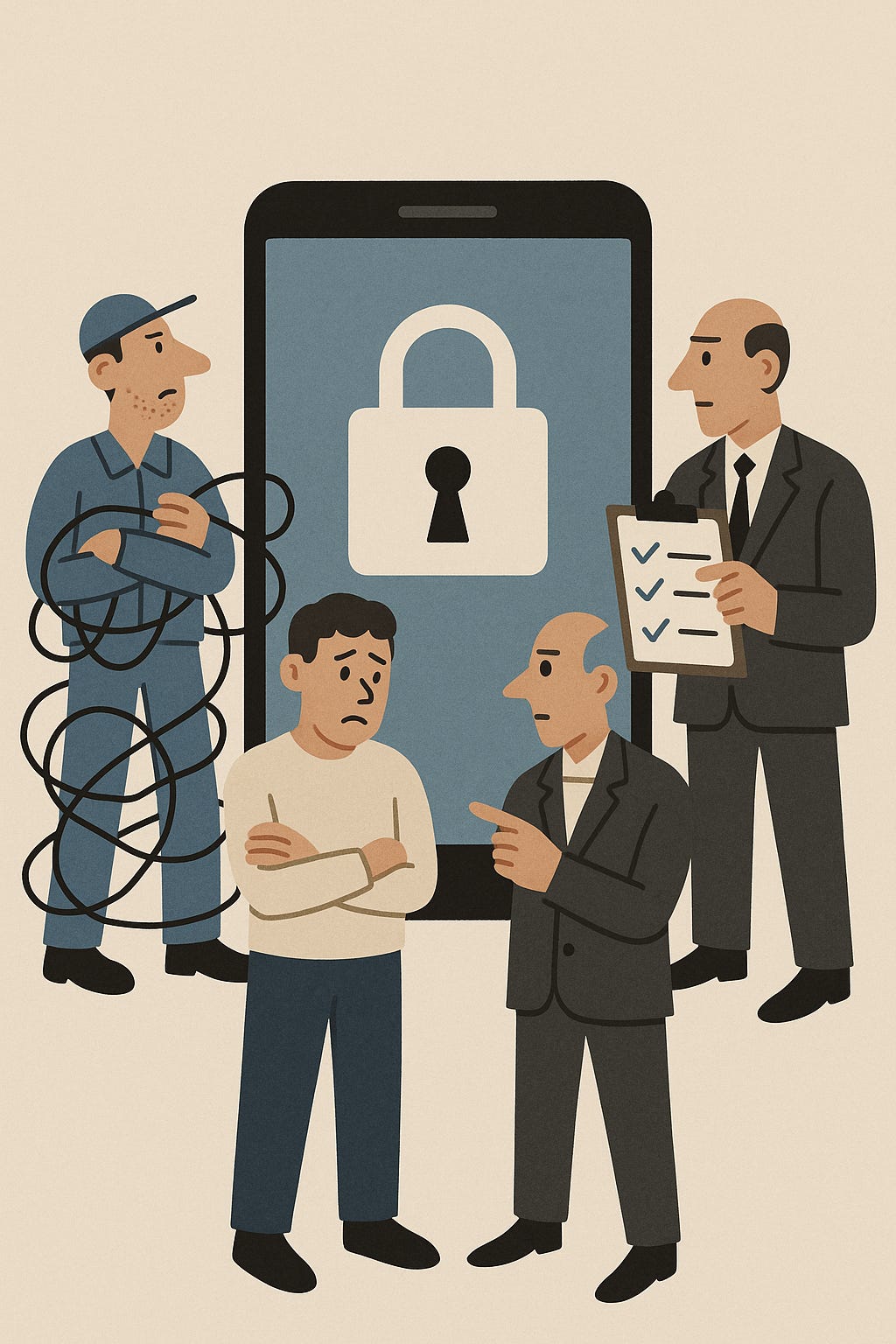
As smartphone financing scales across emerging markets, the use of device locking—a software mechanism that restricts access to a financed phone when payments are missed—has become one of the most powerful, and controversial, tools in the fintech arsenal. Proponents argue that lock mechanisms dramatically improve repayment performance, especially in high-risk lending environments. Critics, meanwhile, warn that they could trigger legal challenges, consumer backlash, and reputational harm if used indiscriminately.
At the heart of the debate lies a difficult question: Who bears the consequences when you restrict access to a digital lifeline? The answer varies across stakeholders—each with their own incentives, constraints, and thresholds for risk. From fintech product managers to regulators and UX designers, managing device locks isn’t just a technical challenge—it’s a cross-functional balancing act with legal, ethical, and commercial implications.
In this article, we examine five stakeholder groups—Product, Compliance, Regulators, UX, and Investors—and break down their core concerns and the mitigation strategies that are beginning to define responsible device lock implementation.
1. Product Managers: Designing Lock Logic Without Breaking Trust
For fintech product managers, the device lock is both a performance lever and a reputational landmine. On one hand, it offers a tangible way to reduce default rates in unsecured lending models. On the other, it risks alienating users if perceived as coercive or opaque.
Core concerns center on:
Balancing repayment performance with user retention and trust
Adapting to regional variations in regulation, enforcement, and consumer norms
Ensuring that lock-trigger logic is transparent, flexible, and defensible
The implementation challenge lies in designing lock workflows that are proportional, time-bound, and explainable. For example, borrowers may receive multiple nudges and grace periods before any enforcement action. In some regions, partial lock functionality (e.g. allowing emergency calls or digital wallet access) is preferred over full lockouts.
Mitigation strategies for product teams include:
Creating tiered lock thresholds based on risk scoring and user history
Offering clear opt-ins and user education flows to avoid surprises
Building real-time overrides that allow customer support or automated systems to resolve disputes or errors swiftly
By prioritizing transparency and optionality, product managers can help position device locks not as a threat—but as part of a fair credit enforcement ecosystem.
2. Risk & Compliance Officers: Building Defensibility Across Borders
For risk and compliance teams, the device lock is a regulatory flashpoint. With digital rights and consumer protections gaining ground globally, any enforcement mechanism tied to personal data or device access invites scrutiny.
Their top concerns include:
Ensuring locks don’t violate consumer protection laws or digital rights charters
Navigating multi-jurisdictional legal exposure, especially in fragmented markets
Maintaining audit trails of lock triggers, exceptions, and resolutions for regulatory review
In markets like Kenya or India, legal definitions of device ownership and data privacy are evolving rapidly. A lock that’s legal today could become prohibited tomorrow—especially if regulators perceive abuse or disproportionate impact on vulnerable users.
To mitigate this, compliance teams are adopting:
Geo-specific compliance frameworks that map lock behavior to local law
Internal lock audits that track every enforcement action, including overrides
Legal reviews of third-party lock providers and software stack integrations
Crucially, they must document how and when lock decisions are made—and ensure that these records withstand the scrutiny of a regulator or court. In a world of real-time fintech enforcement, defensibility becomes just as important as performance.
3. Regulators: Drawing the Line Between Innovation and Abuse
Regulators, particularly in emerging markets, face the twin challenge of enabling innovation while shielding consumers from digital coercion. While device locks can extend credit access to underserved populations, they also introduce new vectors for abuse.
Their core priorities include:
Preventing predatory practices that trap borrowers in aggressive repayment cycles
Setting standards for proportional enforcement, especially for low-value defaults
Monitoring fintechs and telcos to ensure that tech doesn’t outpace regulation
In markets where smartphones are a gateway to banking, healthcare, and education, locking a device can carry far-reaching consequences. A missed $5 payment shouldn’t mean losing access to your child’s school portal or mobile money wallet.
Emerging regulatory guidance often focuses on:
Permitted use cases for locking, such as high-value delinquencies or fraud
Grace periods and minimum thresholds before any enforcement action
Consumer redress mechanisms, including arbitration and appeal processes
Some regulators are going further, proposing licensing requirements for fintechs using lock-based enforcement, or mandating that basic digital services remain accessible even during lock periods. The goal: allow innovation, without weaponizing digital access.
4. UX Designers: Enforcement Without Alienation
UX designers sit at the intersection of enforcement and empathy. How you communicate a lock event—and how a user feels about it—can define their entire relationship with mobile credit.
Their concerns are centered on:
Avoiding fear-based UX that erodes trust or worsens repayment behavior
Designing consent-based flows that clearly explain lock risks and alternatives
Creating graceful resolutions that let users recover from non-payment with dignity
Too often, enforcement UX borrows from punitive models—blunt warnings, red screens, no exit options. But in device-based lending, user perception is product health. A borrower who feels ambushed by a lock screen may churn permanently or lodge a complaint with local authorities.
Instead, best practices in enforcement UX now include:
Progressive disclosures (e.g. countdown timers, warnings before lock)
Resolution wizards that offer payment plans, deferment, or appeal links
Human-centered messaging that contextualizes the lock (e.g. “We understand things happen. Here’s how to stay connected while resolving your payment.”)
In short, UX teams must balance enforcement rigor with psychological safety, ensuring that borrowers don’t feel punished, but supported.
5. Investors: Balancing ROI with Reputational Risk
For investors, device locking represents both a scaling catalyst and a red flag. The ability to reduce default rates in risky markets is appealing—but only if it doesn’t trigger public relations crises or regulatory shutdowns.
Investor concerns include:
Avoiding reputational fallout from consumer backlash or exposés
Evaluating legal and political stability of lock-based models across jurisdictions
Assessing whether long-term portfolio health is best served by aggressive enforcement or by user trust
Mitigating these risks means looking beyond repayment rates to deeper indicators:
Churn rates post-lock event
Net Promoter Score (NPS) changes following lock/unlock flows
Regulatory inquiries or legal proceedings linked to enforcement
Savvy investors now probe into how device locks are messaged, audited, and localized. The most successful fintechs tend to deploy locking as one part of a broader credit culture strategy—not as a blunt instrument.
For capital to flow sustainably into this space, founders must demonstrate that enforcement isn’t just legally compliant—but also operationally ethical and culturally aware.
Device locking is neither inherently abusive nor automatically defensible—it lives in the gray zones of fintech innovation. When used responsibly, it can expand credit to underserved populations, align incentives, and reduce systemic risk. When misused, it risks triggering a cascade of user churn, legal penalties, and reputational damage.
For fintechs and telcos navigating this terrain, the key is cross-functional coordination. Product, compliance, UX, and investor relations must align on a shared philosophy: one that views enforcement not just as a tool—but as a touchpoint for building trust, accountability, and long-term viability.
Because at the end of the day, it’s not just the borrower who’s at risk when a device gets locked—it’s the entire ecosystem.