Once a niche feature for lost-phone recovery, device locking has rapidly evolved into a cornerstone of fintech lending in emerging markets. Across Africa, Southeast Asia, and Latin America, telcos and digital lenders are using this technology to power pay-as-you-go financing—making smartphones accessible to millions who are underbanked or lack a traditional credit history.
The appeal is straightforward: the device becomes both the tool and the collateral. But as adoption grows, the narrative is shifting. The conversation is no longer only about increasing access—it’s about the balance between technology, trust, and regulation.
In this article, we explore the three key Macro Trends defining the future of device locking—plus a set of predictions for how this model could reshape asset financing far beyond mobile phones.
Macro Trend 1: Device-Based Lending Goes Mainstream
What began as an asset recovery mechanism is now built into mainstream consumer credit models. From Kenya to Colombia, device locking underpins affordable installment plans, turning a high-risk loan into a manageable, secured transaction. For lenders, the opportunity is massive; for consumers, the stakes are personal. The challenge lies in scaling these models with fairness and responsible lending practices.
Macro Trend 2: Regulators Start to Circle
Markets like Kenya, India, and Brazil are testing the boundaries of digital collateral regulation. Policymakers are asking: What happens when a lock is triggered without due process? How can borrowers contest wrongful enforcement? Early regulatory frameworks are emerging, and missteps could spark political backlash and consumer rights disputes.
Macro Trend 3: The UX Reckoning
Poorly timed or overly aggressive locks have fueled user frustration—sometimes eroding trust faster than a missed payment. Lenders are experimenting with tiered enforcement, such as soft locks that block non-essential apps but keep core communication and emergency functions intact. This UX design approach preserves repayment incentives without undermining essential access.
Predictions: Beyond Phones
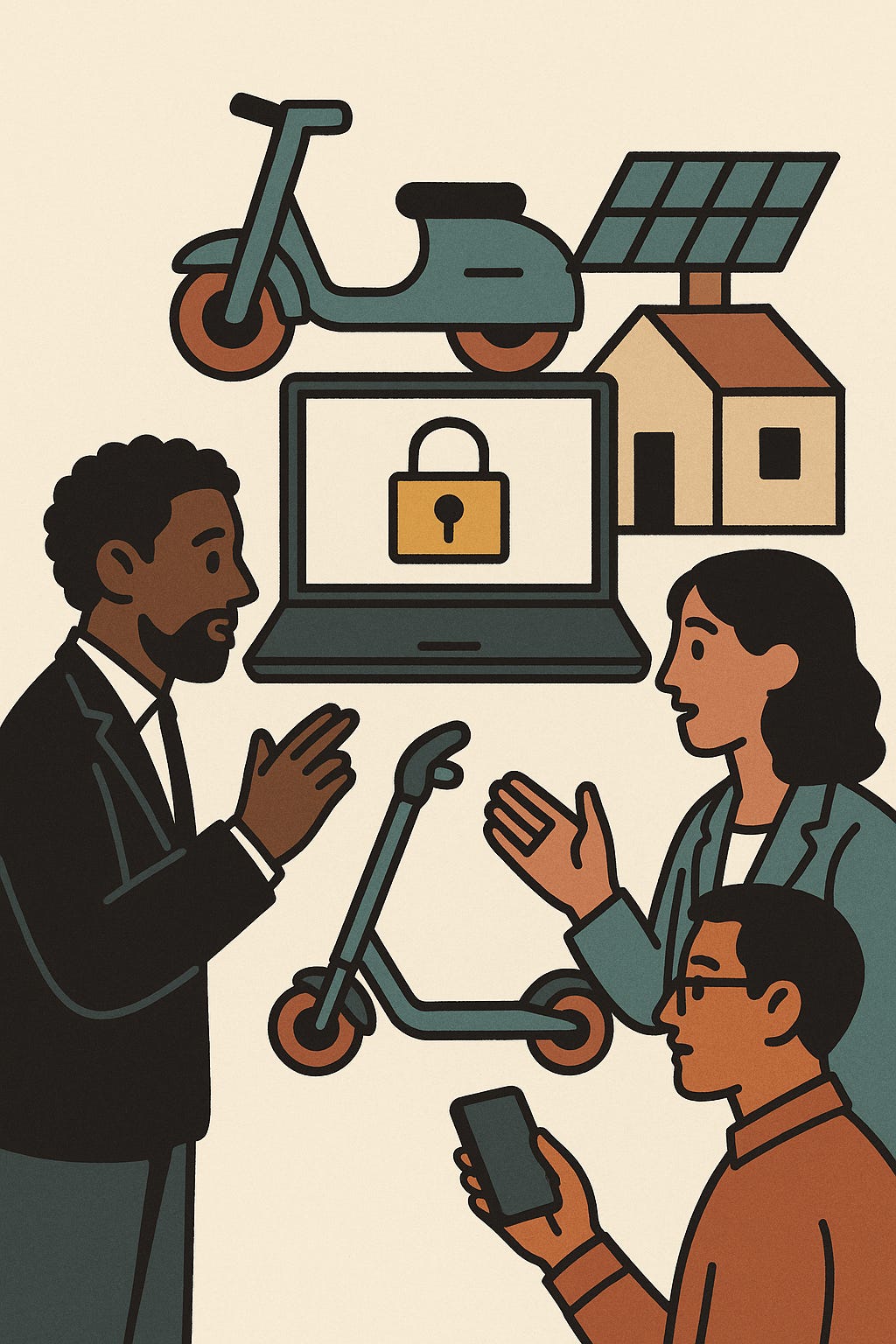
If these models prove viable, the next frontier will expand beyond smartphones. We could see device locking applied to electric scooters, solar home systems, and even laptops—all enabled through pay-as-you-go credit models. A solar panel in a rural village could stay operational only while payments are made; an urban e-bike fleet might lock itself if bills go unpaid.
The potential is vast, but so are the questions around fairness, data privacy, and proportional enforcement.
The Bottom Line
Device locking is no longer a simple technical add-on—it’s a policy decision, a user experience challenge, and a regulatory flashpoint. The next phase will reward those who combine asset-backed lending with empathy and transparency, transforming a blunt enforcement tool into a sustainable driver of credit inclusion.
The question is not whether device locking will spread—it’s how responsibly we choose to deploy it.