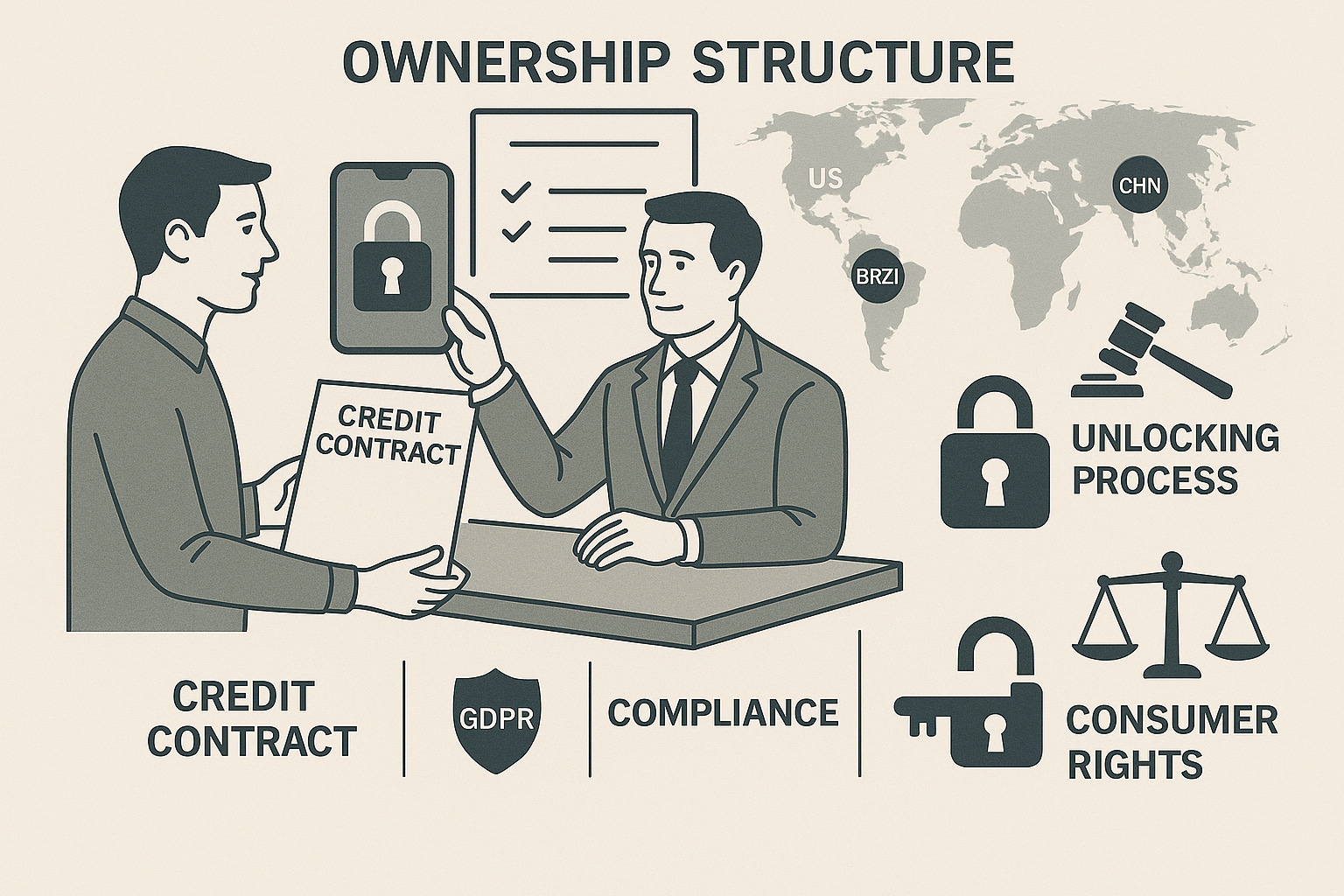
Picture this: you’ve just walked into a store, excited to upgrade to the latest smartphone. The salesperson tells you that you can take it home today with a flexible payment plan, but there’s a catch—the device comes with a lock. In an era where mobile devices are an essential part of our lives, the legality of selling locked devices on credit is a complex puzzle that varies around the globe [1].
Is Selling Locked Devices on Credit Legal?
As more businesses opt to sell devices on credit, the practice of locking those devices has become commonplace. But understanding the laws governing this practice is crucial. Local consumer protection, privacy, and contract laws can differ greatly—what’s acceptable in one country might land you in hot water in another. This guide aims to navigate the key legal considerations and provide insights that protect both businesses and consumers.
Core Legal Considerations
Ownership Structure Matters
Imagine you’ve signed a contract for that shiny new phone. But what does it mean for you in terms of ownership? There are two main scenarios:
Immediate Transfer: The moment you sign on the dotted line, the device is officially yours.
Deferred Transfer: The seller holds ownership until you’ve made all your payments.
Clarifying this aspect in your contracts is vital. It safeguards against future disputes over resale, recycling, and repossession rights, ensuring a seamless transaction.
Data Privacy & IMEI Tracking
Did you know your device’s unique IMEI number is considered personal data? This means businesses must tread carefully, complying with local data protection laws, like the GDPR [2]. As consumers, knowing that your personal information is handled with care isn’t just a legal requirement—it builds a foundation of trust.
Device Locking Terms & Consumer Rights
In many regions, the rights of consumers concerning device locks are significant:
You should receive a heads-up before your device gets locked.
There should be a transparent process in place to contest these locks.
Contracts must clearly state the limitations on resale and the procedures for unlocking.
These rules aren’t mere formalities; they’re essential for fostering a reputable brand.
Compliance & Penalties: Know the Risks
Ignorance of local laws can lead to steep penalties:
Europe: Non-compliance can result in fines of up to €20 million or 4% of a company's global revenue.
Brazil, China, and Singapore: Businesses face fines or license revocations for failing to disclose SIM lock information [3, 4].
United States: With regulatory bodies stepping up scrutiny, deceptive locking practices could lead to penalties, and new FCC rules may soon mandate automatic unlocking within 60 days of activation [5].
These legal landscapes underscore the importance of transparency and responsible enforcement.
Consumer Rights & Dispute Options
Consumers aren't left defenseless when it comes to locked devices; there are options available to challenge unfair practices:
You can escalate concerns within the seller's hierarchy.
Pursue complaints through local telecom regulators.
Take legal action if locking practices seem unjust.
Engage directly to negotiate unlocking or alternative solutions.
By communicating these options effectively, businesses can cultivate trust and adhere to legal standards.
Best Practices for Businesses
To strike the right balance between compliance and customer satisfaction, consider these essential strategies:
Define Ownership and Locking in Contracts: Clearly articulate who owns the device, the conditions surrounding locks, and restrictions on resale.
Communicate Transparently at the Point of Sale: Ensure customers understand the circumstances that lead to a lock and what steps they can take to unlock it.
Protect Personal Data: Handle IMEI and user information according to data protection laws, reinforcing customer trust.
Stay Compliant with Local Rules: Regularly update your policies to reflect local notice and dispute-resolution requirements.
Train Teams and Utilize Technology: Equip your staff with knowledge about legal obligations and leverage tools like Mobile Device Management to simplify processes.
Regional Perspectives
The policies governing device locks can vary significantly around the world:
United States: While locking devices is common, an evolving regulatory landscape may soon require auto-unlocking after 60 days [5].
European Union: Strong consumer protection laws advocate for transparency and fairness, ensuring consumer rights are respected.
Other Countries: In some areas, regulations may be lax, resulting in varying levels of consumer protection that could leave buyers vulnerable.
Why This Matters: Risks for Consumers
Consumers may not realize the implications of device locks, leading to:
Limited options for carriers and increased costs when switching providers.
Unexpected fees for unlocking or terminating contracts.
Decreased resale value for locked devices.
Greater risks of e-waste as locked devices become difficult to recycle.
Complications that can be particularly burdensome for low-income individuals.
By implementing clear credit sales policies with fair locking practices, businesses can alleviate these risks and promote broader access to technology.
Conclusion: A Win-Win for All
Device lock credit sales represent more than just a legal transaction; when managed responsibly, they can provide substantial benefits for businesses. By clearly defining ownership, safeguarding consumer data, and promoting transparency, companies can build trust and establish lasting relationships with their customers.
Are you ready to turn compliance into your competitive edge?
The legal maze of device locks doesn’t have to be a barrier—it can be a brand builder. Whether you're scaling your device sales or refining your credit model, the right strategy makes all the difference.
Get the quick take on LinkedIn with our bite-sized summary of global legal insights — perfect for busy teams who need answers fast.
Have thoughts or questions? Reach out to the GetMobi team—we’re always up for a good conversation.
References:
[1] Wikipedia contributors. SIM Lock. Wikipedia, The Free Encyclopedia. Available at: https://en.wikipedia.org/wiki/SIM_lock (Accessed April 2025).
[2] European Commission. General Data Protection Regulation (GDPR). Available at: https://gdpr.eu/ (Accessed April 2025).
[3] Compliance Hub. Breaches and Fines under Brazil's LGPD. Available at: https://www.compliancehub.wiki/breaches-and-fines-under-brazils-lei-geral-de-protecao-de-dados-lgpd-2/ (Accessed April 2025).
[4] Gan, N. (2022). China fines Didi $1.2 billion for breaking data laws. CNN Business. Available at: https://edition.cnn.com/2022/07/21/economy/china-fines-didi-data-law-violation-intl-hnk/ (Accessed April 2025).
[5] Mehta, I. (2023). “The U.S. Could Soon Ban Locked Phones.” Wired. Available at: https://www.wired.com/story/us-could-soon-ban-locked-phones/(Accessed April 2025).