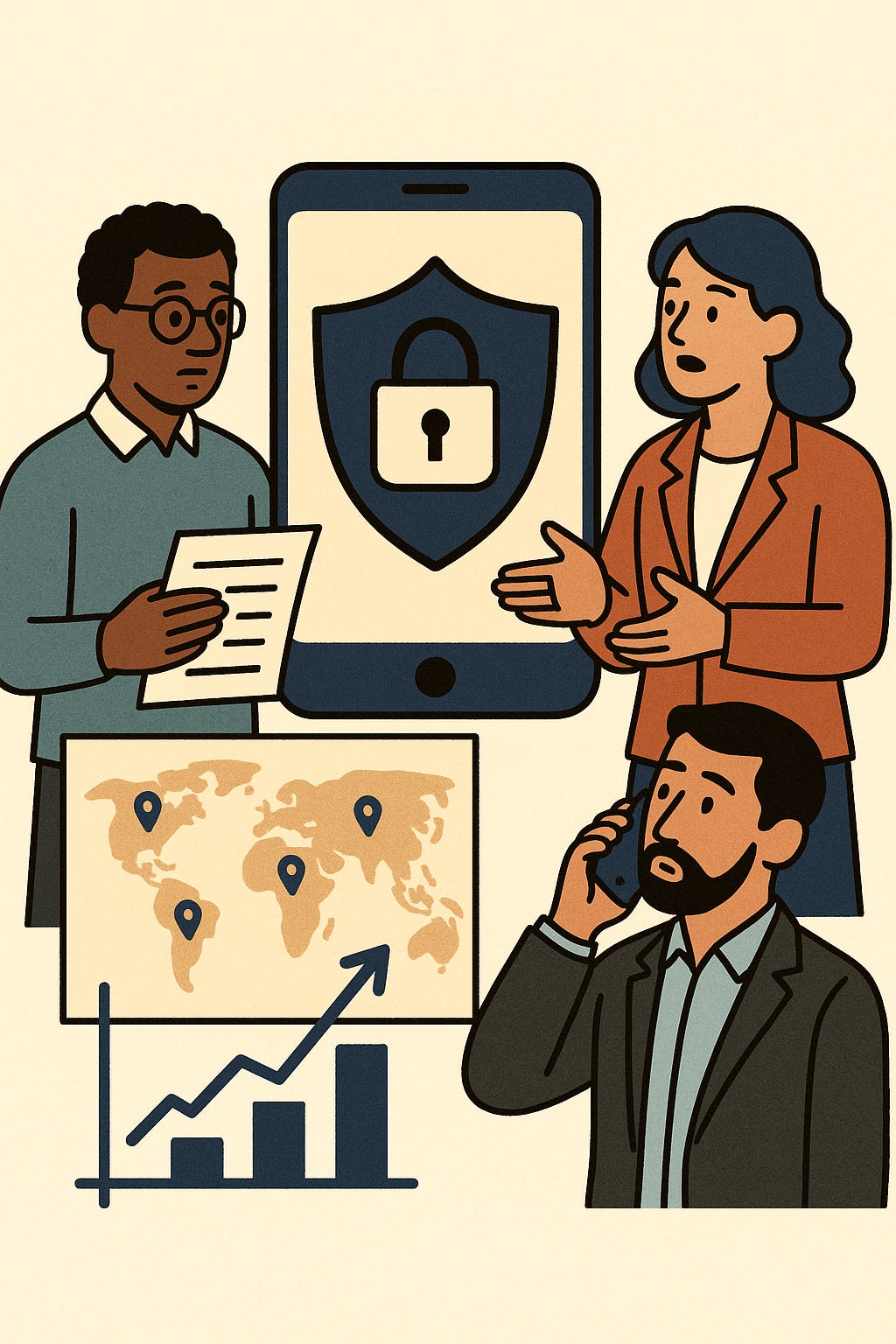
Device locking is quickly becoming a central feature of mobile lending models across emerging markets. By remotely restricting access to a financed smartphone, lenders gain a behavioral lever that can reduce defaults and improve repayment performance. But without careful design and transparent communication, the same mechanism can backfire—sparking user frustration, ethical concerns, and even regulatory scrutiny.
This article is a focused excerpt from our full interview with Victor Kirnarskiy, CEO of GetMobi, a company building smartphone-based credit systems across frontier markets. In the full conversation, Victor shares insights from years of hands-on experience with device-based lending across Asia, Latin America, and other global regions.
Here, we explore three regional implementations—Global, Central Asia, and Latin America—to highlight what makes device locking work, what can go wrong, and what others can learn from GetMobi’s deployments in the field.
Global: The Scale and the Strain
As device financing scales globally, one of the biggest operational hurdles is fragmentation. Different manufacturers—across China, Korea, the U.S., and others—bring a wide range of operating systems and firmware customizations. This isn’t just a technical challenge. It creates real friction in onboarding, customer education, and user support.
“You have to manage your customer experience across all the different vendors, different platforms... it actually takes effort, time, and resources—but it reduces your risk significantly.”
Successful global rollouts require robust UX strategies, including onboarding flows, FAQs, and support scripts tailored to each market. According to Victor, many of GetMobi’s partners now select devices specifically for their lock compatibility, and treat UX not as a bonus—but as part of their compliance and risk infrastructure.
At scale, device locking isn’t just a software feature. It’s a behavioral contract, and every detail of how it’s communicated can impact performance—and trust.
Central Asia: Behavior Change, Measured in Hours
In one Central Asian deployment, GetMobi ran a controlled test: some borrowers had device locking enabled, others did not. The results were immediate and dramatic.
“Recovery rate went from 30% to 60%—just thanks to device locking.”
Borrowers who experienced the lock often repaid within hours. The visibility of consequences triggered urgency—but only when the locking was understood. Without prior communication, users panicked. Some tried to reset or abandon their phones. Others flooded support with complaints.
Victor emphasized that gradual enforcement—via early reminders, temporary locks, and clear escalation—is essential. Full locking should be a last resort, never a surprise.
Latin America: Designing for Consent, Not Control
In Latin America, several partners adopted a more UX-forward approach. Instead of relying solely on contracts, they used interactive onboarding experiences to show users what would happen if they missed payments.
“It’s like a game. You tap through each stage—what happens if you don’t pay. It’s an ‘aha’ moment.”
In some pilots, phones were even delivered in a locked state to simulate the experience before the first payment. This strategy helped set expectations early and reduced the emotional backlash when lock triggers were later applied.
For markets where trust, transparency, and digital literacy vary, this shift toward visible, consent-based education proved essential—not just for user satisfaction, but for long-term retention and repayment success.
Cross-Regional Lessons: Clarity, Consent, and Communication
Across all three regions, one message is consistent: device locking works when users understand it—before it happens.
It’s not just a technical enforcement tool. It’s a psychological signal. When users are caught off guard, they feel punished. When they’re prepared, they respond productively.
“Turning the device into a locked state is not the goal. The goal is repayment—not punishment.”
Victor advocates for multi-layered communication: visual onboarding, human explanation, reminders, and soft lock stages. The objective is never just to lock—it’s to recover loans while maintaining user dignity.
Global Lessons from Real-World Deployments
As more fintechs and telcos adopt device locking, the difference between a successful deployment and a reputational risk often comes down to UX, timing, and transparency.
From Central Asia’s repayment boost to LATAM’s onboarding innovation, these real-world deployments offer a blueprint—and a warning. At GetMobi, the lesson is clear: technology can enforce, but trust must be earned.
Want to hear more about how these strategies play out on the ground?
Read the full interview here