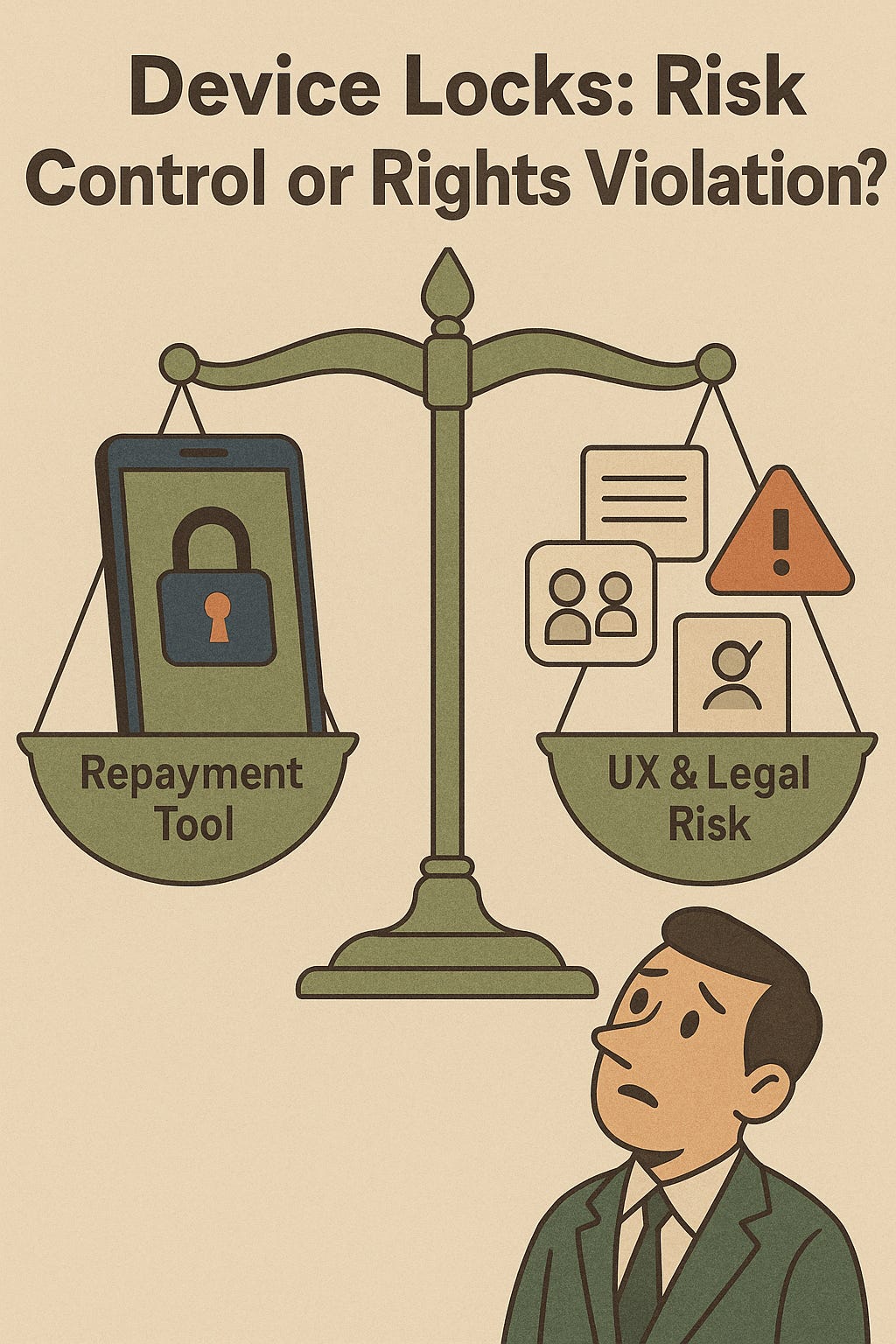
Lock or Liability?
Smartphone financing is booming across emerging markets, bringing millions of people closer to digital connectivity—and to credit. But this new wave of access comes with an old challenge: risk. How can lenders ensure repayment when legal systems are slow, costly, or ineffective? One increasingly popular solution is device locking: the ability to remotely disable a borrower’s phone when payments are missed. To some, it’s a brilliant safeguard. To others, it’s a potential ethical and regulatory minefield.
To explore the practical realities and evolving landscape of this tool, we spoke with Victor Kirnarskiy, CEO of GetMobi, a company pioneering device-based mobile credit across multiple regions. As the person behind GetMobi’s lending infrastructure, Victor brings firsthand experience spanning hardware integration, customer behavior, and global partnerships. His insights offer a grounded look at what’s working—and what’s not—when it comes to locking.
This interview explores the real-world impact of device locking on credit recovery, customer trust, ethical challenges, and the future of digital lending.
What role does device locking play in reducing credit risk and improving loan approvals?
Victor Kirnarskiy:
Device locking serves as an immediate consequence—an operational trigger that makes the cost of non-payment visible and tangible to the borrower. It doesn’t replace traditional risk checks like credit bureau data or banking history, but it enhances them. When borrowers know the device will lock, it changes behavior. This reduces defaults and gives lenders confidence to approve more loans, especially in riskier segments.
“Device locking is a critical supplement—it boosts approval by reducing risk in real time.”
Can you share a real-world example of how device locking improves repayment rates?
Victor Kirnarskiy:
We saw this clearly in Central Asia. In one deployment, the recovery rate increased from 30% to 60% after device locking was introduced. That’s a twofold improvement. Borrowers reacted quickly when their phones were disabled—some within hours. The lock served as a wake-up call and led to prioritized repayment.
“We saw repayment rates double—just because the device lock was switched on.”
What operational challenges arise when deploying device locking at scale?
Victor Kirnarskiy:
Scaling isn’t just about switching on a feature—it means supporting a fragmented device ecosystem. You’re dealing with phones from dozens of manufacturers, each with different software and user interfaces. That demands careful UX design, localized customer support, and clear educational content. It’s resource-intensive, but it’s worth it because the return in risk mitigation is significant.
“To scale device locking, you need to educate across every brand, platform, and user journey.”
How do borrowers typically respond when their device is locked?
Victor Kirnarskiy:
Their first reaction is frustration—especially if they didn’t expect it. Some try to reboot or reset the phone. Others reach out to the lender for help. Eventually, most either repay or enter dialogue. That’s why locking should be the last step in a larger communication strategy: emails, calls, SMS, push notifications. Done right, the lock is the final nudge—not the first threat.
“Locking triggers frustration—but it’s often the nudge that gets people to repay.”
What ethical concerns arise when locking devices, especially for low-income borrowers?
Victor Kirnarskiy:
Many first-time borrowers don’t read the fine print. When the device locks, they feel betrayed. That’s dangerous—not just ethically but commercially. If customers don’t trust the system, they won’t come back. That’s why it’s essential to explain the lock clearly from day one—through good UX, store staff, or interactive tutorials. Informed users are more loyal users.
“If customers don’t know the rules, device locking feels like betrayal—not enforcement.”
What are best practices to ensure borrowers truly understand the lock mechanism?
Victor Kirnarskiy:
First, make the lock visible before it happens—via clear visuals, onboarding tutorials, or even starting the device in a locked state. Second, train staff in offline channels to explain what locking means and how to avoid it. The goal is not fear, but clarity. If the customer understands the rules upfront, they’re more likely to stay compliant and feel respected.
“The best way to explain the lock is to show it—clearly, visually, and early.”
Does device locking help lenders expand to new customer segments?
Victor Kirnarskiy:
Yes—dramatically. Locking lets lenders serve borrowers who would otherwise be too risky. It increases approval rates and enables safe expansion into segments that were previously out of reach. While it also helps with existing customers, its true power is unlocking access to entirely new layers of the market.
“Device locking unlocks access to customers you couldn’t serve before.”
Will device locking remain central to digital lending, or are alternatives emerging?
Victor Kirnarskiy:
It’s only getting more important. As devices become smarter and more expensive, financing will grow—and so will the need for enforcement tools. We’re already seeing this in sectors beyond smartphones, like EV subscriptions. Any asset with an operating system is a candidate for digital locking. This isn’t a temporary fix—it’s becoming a core strategy in modern asset-based lending.
“Device locking isn’t going away—it’s becoming the default in digital asset lending.”
Balancing Power and Responsibility
Device locking offers a powerful path to safer credit in underserved markets—but it’s not a silver bullet. As Victor Kirnarskiy makes clear, it works best when combined with transparent communication, thoughtful UX design, and respect for borrower dignity. Lenders and telcos that treat locking as a long-term relationship tool—not a one-time enforcement tactic—are more likely to see sustained results.
For fintechs exploring smartphone financing, and regulators shaping the rules, the message is clear: this technology is here to stay—but it must be deployed responsibly.
Want to explore how to implement responsible locking at scale? Let’s connect.